

Mac vs PC in Business: Busting the ‘Expensive’ Myth
11 Dec 2025

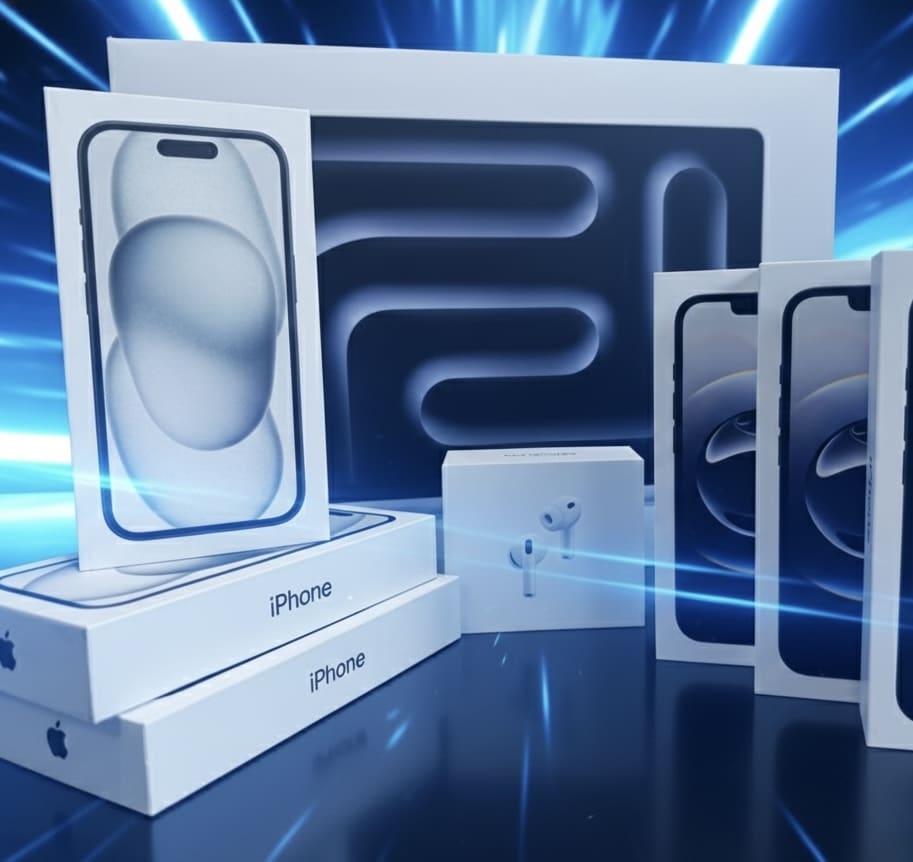
Mac vs PC in business: why higher upfront Mac costs can still mean lower total cost of ownership
If the sticker price for a Mac is higher, how can it end up costing less than a PC? By looking at the full total cost of ownership (TCO) — support, security, productivity, energy use, and resale value over the entire device lifecycle — the usual “Mac versus PC in the enterprise” myths start to fall apart.
Apple still has a reputation for being “the expensive option” in Mac vs PC in business discussions. Look a bit deeper, though, and the numbers around employee choice, support, security, and energy use tell a very different story: in many environments, Mac can deliver a lower total cost of ownership (TCO) than a comparable PC fleet, while also driving higher satisfaction and productivity.
Employee choice, satisfaction and productivity
Studies of device‑choice programmes consistently show that letting people choose their platform improves satisfaction, retention, and performance. A 2024 Forrester study on device choice found that over 90% of staff reported higher job satisfaction and feeling more valued when they could choose their own device, and 85% said they were more likely to stay in their job when given that choice. The same research linked device choice to better productivity, with 93% of staff agreeing they were more productive on the device they chose.
When employees do have a choice, a substantial share pick Mac. Forrester’s Total Economic Impact (TEI) of Mac in Enterprise describes a composite organisation where, once choice was introduced, 30% of eligible staff chose Mac in year one, rising to 40% by year three. Those Mac users benefitted from improved performance, longer battery life, and better reliability, all contributing to higher engagement and fewer interruptions in daily work.
Quantifying the Mac user advantage
Multiple analyses have tried to quantify what that experience translates to in hard numbers. In the TEI of Mac in Enterprise (M1 update), Forrester reports that organisations gained 48 hours of additional productivity per Mac user over three years through reduced start‑up times and less downtime, alongside an ongoing 5% uplift in general productivity for Mac users. IBM’s internal data, highlighted in third‑party summaries of its large‑scale Mac deployment, similarly links Macs to higher employee performance and lower likelihood of staff leaving compared with PC users.
From an IT perspective, Forrester’s composite organisation saw meaningful efficiency gains: fewer tickets, less time spent on issue diagnosis, and quicker resolution when problems did arise. That combination of fewer incidents and faster fixes reduces the day‑to‑day drag on both users and IT teams, and it feeds directly into the TCO picture, not just soft “happiness” metrics.
Cost of basic services and software
At a basic level, core services such as power, connectivity, and internet access cost roughly the same regardless of platform. The divergence begins when you account for the software and tools required to deliver a secure, managed, enterprise‑grade environment. Jamf’s TCO analysis notes that many organisations end up adding multiple third‑party tools onto Windows to replicate capabilities that are already built into macOS, such as encryption, advanced anti‑malware controls, and integrated management hooks.
Directory and identity services have also shifted. With more organisations adopting cloud identity providers and modern access tooling, Mac can plug into the same cloud identity stack, while dedicated tools such as Jamf Connect can streamline provisioning, identity, and secure access flows on macOS. When you factor in licensing, point tools, and management overhead, the “basic services and software” layer is often no cheaper on PC than Mac—and in some environments, it can be higher on the PC side due to the number of moving parts needed.
Hardware, power usage and lifecycle
On paper, many business‑class PCs are cheaper than a Mac at the point of purchase. However, a growing body of data shows that Macs often deliver more performance per watt and a longer effective lifecycle. Forrester’s TEI work cites composite savings of around NZD $1,448 per Mac over a three‑year lifecycle compared with PCs, taking into account hardware, support, and risk reduction. IBM’s own analysis found savings in the range of NZD $469–$880 per Mac on support and lifecycle costs compared with PCs in its estate.
Apple silicon has further shifted the hardware equation. Analysis of power and thermal behaviour across generations shows Apple silicon Macs delivering higher performance with lower power consumption than comparable Intel‑based Macs, which already competed well with many PCs in the same segments. Lower power draw and reduced heat benefit mobile users through longer battery life and cooler devices, and for desktops and fleets, they can contribute to lower energy use and simpler cooling requirements in the long term. When combined with typically strong residual values at the end of life, these hardware characteristics help offset the higher upfront price tag.
Business apps, device management and security
Modern business applications are increasingly browser‑based or delivered as cross‑platform clients, and key productivity suites such as Microsoft 365 and Google Workspace have first‑class support on macOS. For specialist or legacy workloads, virtualisation and remote application delivery can bridge most remaining platform gaps. As a result, many organisations in Forrester’s and Jamf’s research reported that Mac users had no significant disadvantage in application access, and often benefitted from better app stability and performance.
On management and security, purpose‑built Apple ecosystem tools have matured to the point where large enterprises are confidently running tens of thousands of Macs with centralised policy control, patching, and telemetry. Forrester’s TEI findings associate Mac adoption with lower security incident risk, citing up to a 50% reduction in breach risk per Mac compared with a baseline PC device. High levels of native encryption, secure boot, hardware‑backed security features, and a tighter hardware–software integration surface all contribute to this risk reduction. These capabilities reduce the need for some layers of third‑party tooling and can simplify compliance work in regulated industries.
Admin and support cost comparison
When organisations move beyond pilot scale, differences in admin and support costs in the Mac vs PC in business context become clearer. Jamf’s TCO paper, drawing on IBM’s deployment experience, describes support savings of several hundred US dollars per Mac across its estate, driven by fewer helpdesk tickets, reduced time spent on imaging and deployment, and a lower need for escalated support. Forrester’s composite organisation in the TEI analysis saw significant savings in IT support and management over five years, with Mac deployments contributing to lower spend on both support labour and certain classes of tooling.
These findings are reinforced by individual case studies where IT teams report being able to manage more devices per admin when those devices are Macs, particularly when combined with an Apple‑focused management and security stack. Fewer OS‑level issues, streamlined updates, and more predictable behaviour reduce the operational noise floor, freeing IT staff to focus on higher‑value initiatives rather than constant firefighting.
Total cost of ownership (TCO): pulling it together
When you bring these strands together—employee choice and retention, productivity gains, support and admin savings, security risk reduction, energy efficiency, and residual value—the TCO picture starts to favour Mac in many enterprise and mid‑market scenarios, despite the higher sticker price. Forrester’s TEI study summarises this as a multi‑year ROI well above 100% for Mac deployments in a composite enterprise, including quantified reductions in support costs, avoided hardware/software/energy expenses, lower breach risk, and improved employee productivity.
That does not mean Mac will always be cheaper in every use case or every environment. There are still workloads, industries, and legacy stacks where PC remains the pragmatic choice. But for a large portion of knowledge workers, especially in environments that value security, user experience, and long‑term operating efficiency, the evidence suggests that Macs—particularly when offered as part of an employee choice programme—can reduce total cost of ownership compared with a like‑for‑like PC estate.
Integrate Apple into your organisation with Imagetext
So the real question for NZ SMBs in the Mac vs PC in business debate isn’t just “Is Apple too expensive?” – it’s “Are we measuring the full cost of ownership?” With the right financing structure and a partner that understands how to integrate Apple into your business, Macs and other Apple devices can become a cost‑saving, lower‑risk platform for your team.
Book a consultation today → Imagetext.co.nz

Jamf’s TCO paper
Contact 09 623 3102
IMAGETEXT IT SPECIALISTS 3 Owens Rd, Epsom, Auckland 1023 www.imagetext.co.nz
#ManagedIT #NZBusiness #TechSupportNZ #ITServices #AppleCertified #MacandPC #BusinessTechnology #CyberSecurity #Productivity #SmallBusinessNZ #AucklandBusiness #imagetext
Share:
Services
More Services
Contact Imagetext
Phone: +64 (09) 623 3102
Level 1, 3 Owens Road,
Epsom, Auckland 1023
New Zealand
Connect With Us